Should Plumbing Companies Publish Their Prices Online? The Surprising Marketing Value of Transparency
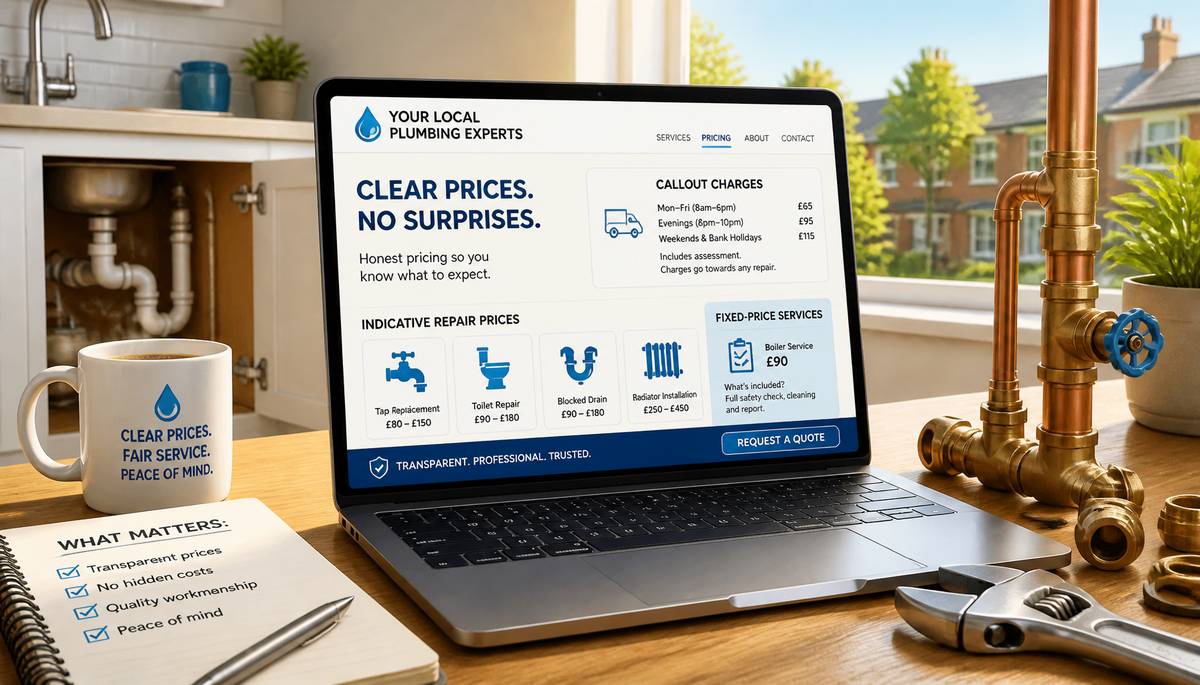 A mysterious plumbing bill can produce more anxiety than the leak itself, particularly when the customer discovers that replacing a modest-looking component apparently requires the financial resources of a small European government. Yet many plumbing companies still treat their prices as closely guarded secrets, revealing little until a customer makes contact or an engineer arrives at the property.
As consumers become increasingly accustomed to comparing prices online, this reluctance presents an interesting marketing question. Could plumbing businesses attract better customers, reduce wasted enquiries and strengthen their reputations simply by explaining what their services are likely to cost?Why Plumbing Prices Have Traditionally Remained Hidden
Unlike buying a washing machine or ordering a takeaway, plumbing repairs rarely involve completely predictable costs. Two leaking taps might look identical, yet one requires a replacement washer while the other involves corroded fittings, inaccessible pipework and a previous owner's enthusiastic interpretation of DIY plumbing.
Travel distances, emergency availability, replacement parts and the condition of existing installations can all influence the final bill. Publishing one universal price therefore risks creating unrealistic expectations.
However, legitimate uncertainty should not prevent businesses from explaining their charging structures. There is an important distinction between being unable to guarantee the cost of a repair and refusing to disclose how customers will be charged.Callout Charges Shouldn't Be a Guessing Game
One of the simplest opportunities for transparency involves publishing callout charges. Customers should understand whether an initial visit carries a fee, whether diagnostic work is included and how much additional labour might cost.
A plumbing company might explain that standard appointments involve a fixed assessment charge, while emergency visits during evenings or weekends attract a higher rate. It should also clarify whether the initial payment contributes towards subsequent repairs.
This information can prevent unpleasant disagreements and discourage enquiries from customers whose budgets are incompatible with the company's rates. Losing an unsuitable enquiry before dispatching an engineer is considerably cheaper than discovering the disagreement halfway through dismantling somebody's bathroom.
Businesses should also explain whether published figures include VAT, materials and parking expenses. A seemingly competitive headline price becomes considerably less attractive when unexpected extras begin multiplying like rabbits.Indicative Prices Can Build Confidence Without Making Promises
Publishing estimated price ranges for common repairs offers another practical compromise. Plumbing companies could provide indicative costs for replacing taps, repairing toilet mechanisms, clearing straightforward blockages or installing replacement radiators.
These figures should be accompanied by clear explanations of what influences the final quotation. Accessibility, component specifications, existing pipework and the discovery of additional faults may all affect the amount charged.
Importantly, indicative pricing is not the same as guaranteeing a fixed amount. Customers generally understand that unforeseen complications cost money, provided those possibilities have been explained beforehand.
By offering realistic guidance rather than suspiciously attractive starting prices, plumbing businesses can demonstrate professionalism before the first telephone conversation even begins.
Fixed-Price Servicing Makes Comparison Easier
Certain plumbing services lend themselves particularly well to fixed-price packages. Routine boiler servicing, annual maintenance inspections and straightforward appliance installations often follow reasonably predictable procedures, making them suitable candidates for clearly advertised charges.
A company offering a fixed-price boiler service should explain precisely what the package includes, what it excludes and whether additional repairs require separate approval. Customers appreciate knowing whether their £90 appointment will actually cost £90, rather than discovering that the advertised price covered little more than the engineer locating the boiler.
Fixed-price packages can also encourage repeat business. Landlords managing several properties, for example, may prefer contractors offering transparent annual maintenance arrangements rather than negotiating individual charges whenever something requires attention.Online Quotation Tools Without the Crystal Ball
Digital quotation tools offer plumbing businesses another opportunity to simplify customer enquiries. An online form could ask about the property type, location, nature of the problem, accessibility and urgency before producing an estimated price range.
Customers might also upload photographs of damaged fittings or leaking connections, helping engineers identify likely requirements before visiting. However, photographs cannot reveal every concealed defect, and automated estimates should never be presented as guaranteed quotations without sufficient information.
The objective is to establish reasonable expectations, not to convince customers that a computer has developed supernatural powers of plumbing diagnosis.Transparency Can Separate Professionals From Opportunists
Clear pricing also provides a useful distinction between reputable contractors and operators who rely on vague estimates, excessive emergency charges or unexpected additions to invoices.
A professional plumbing company can strengthen customer confidence by publishing its charging policy, explaining when quotations are binding and obtaining approval before undertaking additional work. Written estimates and itemised invoices reinforce that approach.
For homeowners facing urgent repairs, these details matter enormously. A burst pipe already creates enough uncertainty without introducing a second emergency involving the household finances.
Transparency does not necessarily mean being the cheapest contractor. It means helping customers understand what they are purchasing and why particular services cost what they do.Putting a Price on Peace of Mind
Plumbing companies entering 2026 face customers who increasingly research contractors before making contact. Businesses that publish meaningful pricing information may consequently enjoy an advantage over competitors offering nothing beyond an invitation to telephone for details.
The strongest approach combines published callout charges, realistic repair ranges, fixed-price services and clear explanations of circumstances that could increase costs. Prices should also be reviewed regularly so that outdated information does not undermine the confidence it was intended to create.
Ultimately, transparency is less about revealing every possible charge than removing unnecessary uncertainty. Customers do not expect plumbers to predict the condition of pipes hidden behind walls. They simply want to know that the final invoice will reflect a fair, understandable charging process rather than an elaborate financial surprise.
|
|

